
Board 6
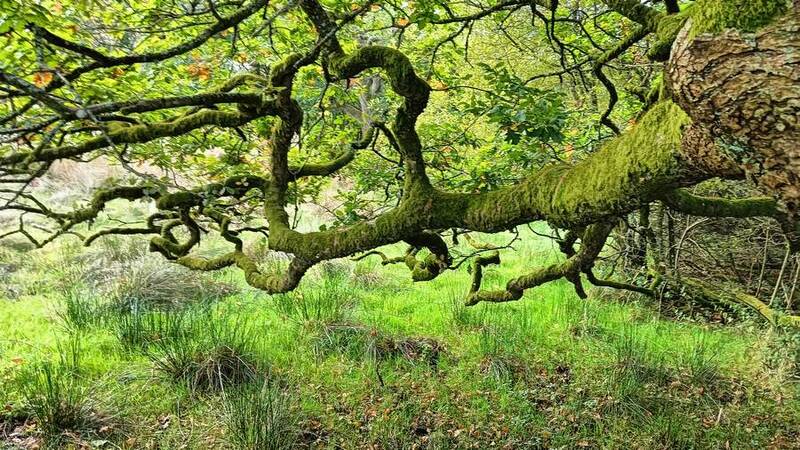
The Beech and the Slate — A Tree as Library
A slate, wedged between beech branches. That is where Crockett read as a boy — secretly, away from his strict Cameronian grandparents, who had circumscribed his reading to the Bible and the Lives of the Covenanters. Up in the beech, feet dangling into empty air, he read Chambers's Edinburgh Journal and Hogg's Instructor. The height was the point: above the reach of domestic authority, in a space that was entirely his own.
The same image reappears in his fiction. In ‘Love Among the Beech Leaves’, young Rab Christie lures Bess MacAndrew into the canopy — using the promise of ghost stories, and a reading slate, as his inducement. Up there, the ordinary rules of class and propriety do not apply. The beech makes room for something that cannot happen below.
This is Crockett's method made visible: the same image circulates across memory and invention, gathering new meaning each time. The slate that held forbidden reading becomes the slate that enables a courtship. The tree that gave the boy privacy gives the young man — the character who carries some of his memories — a stage.
The beech appears again, in different forms, across his fiction. It is one of his most evocative images precisely because it is true: because he actually climbed it, actually read there, and because the experience left a permanent mark on his imagination.