
Husband and Minister
Between 1885 and 1887, Sam published Dulce Cor, courted Ruth Mary Milner, and entered the ministry.
The Milners of Manchester
George Milner (1829-1914) was a prosperous Manchester businessman, poet, and long-time president of the Manchester Literary Club. He co-authored a dictionary of Lancashire dialect and moved in literary circles where poetry was discussed and books were published. For Sam, working as a reviewer and critic in the early 1880s, such connections were professionally valuable.
Sam likely met the Milner family through his reviewing work. Ruth Mary Milner became central to his future. Their courtship unfolded within Victorian expectations of class and income. A writer of uncertain parentage pursuing work as a travelling tutor was not an obvious match for a prosperous businessman's daughter. The Milners' world was far removed from Little Duchrae.
Dulce Cor & Courtship
Published in 1886 under the pseudonym Ford Bereton, Dulce Cor was a literary declaration. It was dedicated to George Milner. Dulce Cor means 'sweetheart', evoking Sweetheart Abbey in Dumfriesshire where Lady Dervorgilla buried the heart of her beloved John Balliol.
Ruth appears throughout the poems as 'Lady Beatrice', a reference to Dante's Divine Comedy where Beatrice Portinari serves as guide through Paradise, representing divine love and wisdom. This literary framing demonstrated Sam's classical education whilst elevating the addressee above conventional romantic poetry.
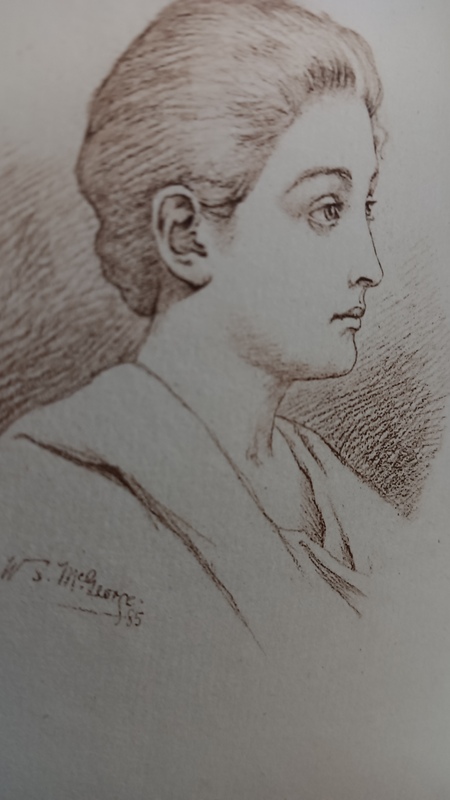
MacGeorge contributed a portrait as frontispiece. The collection shows influence from Tennyson and Whittier, with some poems dated from December 1883, evidencing at least two years of composition before publication.
Marriage, Illness & Ministry
By 1885, Sam was preparing to return to New College to complete Divinity studies. He matriculated there in December 1885, graduated in spring 1886, and was installed as minister at Penicuik Free Church by November 1886. The ministry offered financial security and social respectability—both essential for what he truly wanted: marriage to Ruth Mary Milner.
They married on 16 March 1887. The marriage certificate lists Crockett’s father as 'David Blaine Crockett'—almost certainly a fiction. However with his mother and both grandparents dead, no one remained to contradict the invention. While research has tried to link a David Blaine to Anne Crocket, we cannot but speculate on the truth behind the fiction on the certificate.
On 13 January 1887, Crockett wrote to his friend Hornell discussing his upcoming marriage and the planned honeymoon. He told Hornell the parish of Penicuik paid for the trip.
However, the Italian honeymoon brought lasting illness. As Crockett later wrote to Furniss in August 1888: 'my wife caught malaria in Italy just after our marriage and has been ill ever since.' Although she recovered from the acute illness, both experienced recurring bouts of what contemporaries called 'brain fevers'.